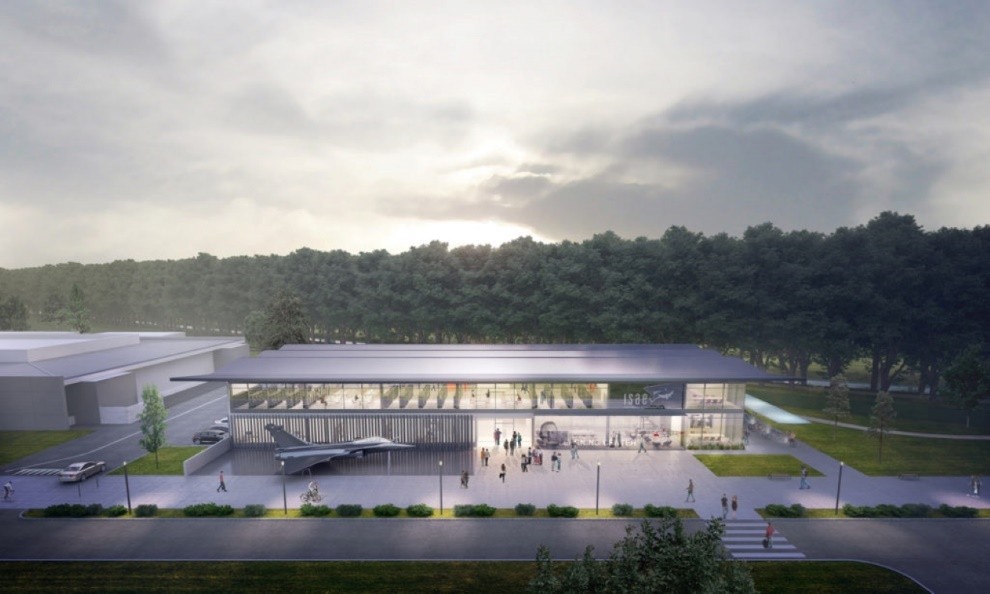
ISAE-SUPAERO: 115 Years of Edge-of-the-Envelope Aero Research
Tucked in the southeast section of Toulouse, France with neighbors such as Ecole Nationale de l’Aviation Civile (ENAC) and Airbus Defence and Space, is one of the most highly regarded aerospace engineering schools in the world – Institut Supérieur de l’Aéronautique et de l’Espace (ISAE-SUPAERO).
ISAE was founded in 1909, the same year Frenchman Louis Bleriot made the first crossing of the English Channel by airplane.
The school’s graduates have included Henri Ziegler, father of the Airbus program, and current Airbus Group CEO Guillaume Faury, Dassault Aviation founder Marcel Bloch-Dassault and his son Serge Dassault, and the co-founder of Russia’s Mikoyan-Gurevich (MiG) aviation bureau, Mikhail Gurevich.
ISAE-SUPAERO is a research and innovation-driven institution, conducting theoretical and applied research in fields such as aerodynamics, automatic control, advanced robotics, aerospace electronics and propulsion systems.
The school’s facilities feature wind tunnels, an altitude simulation test bench, flight simulators, fatigue-measurement machines, research aircraft, drone experimental facilities, and neural science experimental facilities.
At the international level, ISAE-SUPAERO cooperates with European universities such as Cranfield in the UK, TU Delft in The Netherlands, KTH Stockholm, ETSIA Madrid, TU Munich, Pisa, and leading North American engineering schools, among them MIT and Stanford.
Only elite students, 200 of them a year, are selected for ISAE from the Mines-Ponts competitive exam, which requires at least two years of intensive preparation after high school.
The Neuroergonomics and Human Factors research group conducts studies on HF applied to aviation safety and includes research and teaching faculty members, as well as post-doctoral students, with interdisciplinary expertise in neuroscience, signal processing, machine learning, computer science, and human factors. The team has become a key player in human factors for flight safety, developing collaborations with major aeronautical firms and airlines, and providing expertise for civilian aviation authorities. It is supported by the AXA Research Fund and Dassault Aviation.